ServicesFleet Truck Insurance
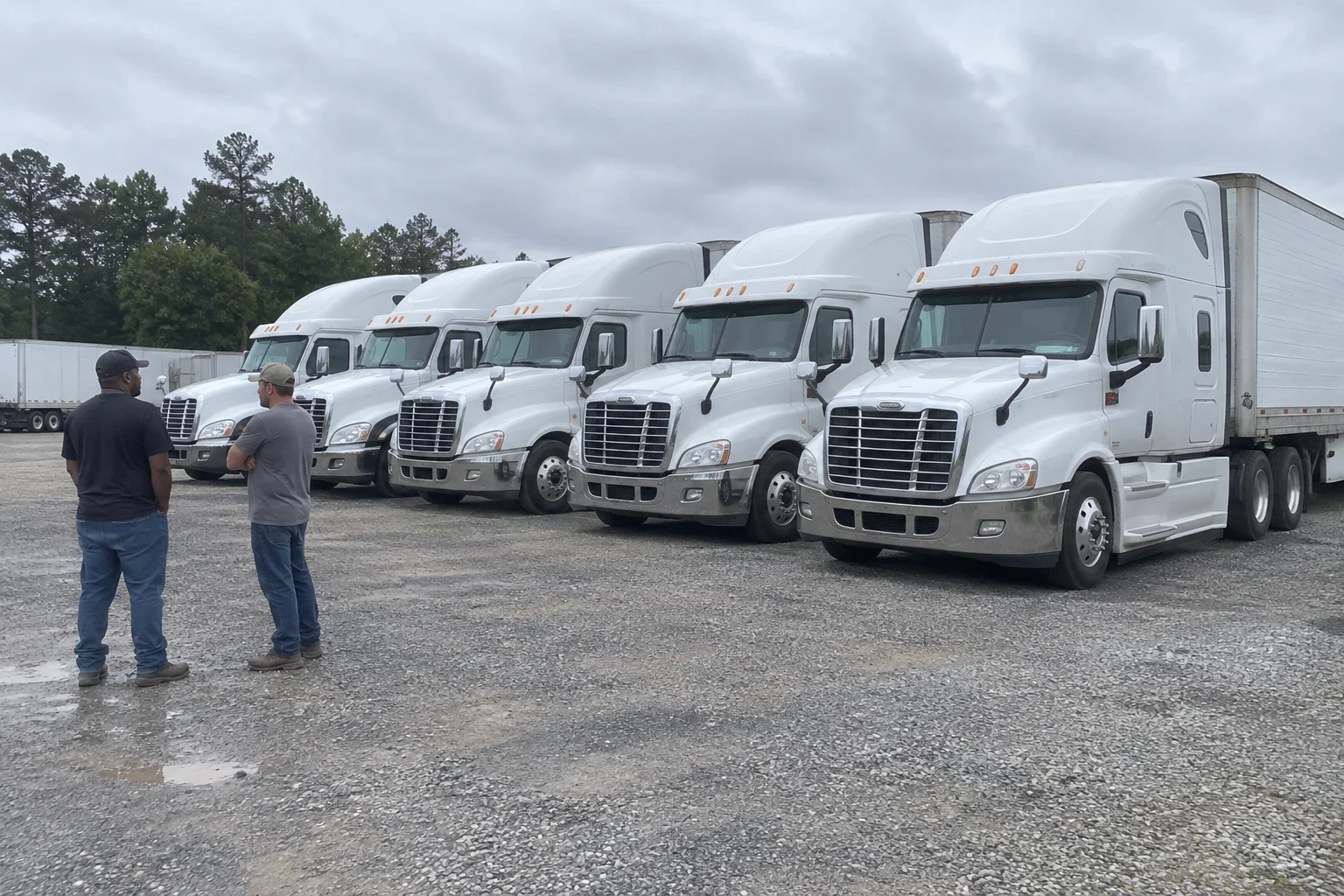
Fleet Truck Insurance in Douglasville
When you run several trucks, the policy has to keep up with new units, new drivers and shipper contracts. We build fleet coverage one line at a time and explain the trade-offs of each, so you know what you are paying for before you sign.
What a fleet policy actually is
A fleet policy puts your trucks, trailers and drivers under one program instead of a stack of separate policies. That means one renewal date, one set of filings tied to your DOT number and MC authority, and one place to add or drop a unit when your operation changes.
The policy is built from parts. Primary auto liability is the required base. Physical damage, motor truck cargo, trailer interchange and non-trucking liability are added depending on what you haul and how you run. Each part has its own choices about limits, deductibles and how a truck is valued, and those choices change both the premium and what happens after a loss.
Our approach is to set those options side by side and talk through what each one does for a fleet your size. Some operations are better served by a higher deductible on older tractors. Others need a cargo form that fits a specific commodity. We would rather you understand the trade-off than simply accept a bundle.
The pieces we put together for your fleet
- Primary auto liability
- Covers injury and property damage your trucks cause to others. We match the limit to your federal requirement and to what your shippers and brokers ask for, which is often higher than the minimum.
- Physical damage by unit
- Each tractor and trailer is listed with its own value and deductible. We explain stated value versus actual cash value so a newer truck and a paid-off older one are each handled sensibly.
- Motor truck cargo
- Cargo coverage is shaped by what you haul. Reefer breakdown, high-value loads and excluded commodities all matter, and we read those exclusions with you before you bind.
- Trailer interchange and bobtail
- If your drivers pull trailers you do not own under an interchange agreement, or run leased owner-operators, we cover those gaps with trailer interchange or non-trucking liability as needed.
- Driver and unit schedules
- We keep an accurate list of drivers and VINs on the policy, since an unlisted driver or truck is one of the most common reasons a fleet claim gets complicated.
- Filings and certificates
- We handle the federal and state filings tied to your authority and issue certificates of insurance to shippers, brokers and lessors when they ask.
Signs it is time to move to a fleet policy
You just added a second or third truck
Running each truck on its own policy gets expensive and hard to track. Once you have more than one power unit, a combined program usually makes more sense.
Renewal dates are scattered
If different trucks renew in different months, it is easy to miss a lapse. A lapse can trigger an authority problem with the FMCSA.
Brokers keep asking for new certificates
Slow certificates cost loads. A single fleet policy means one certificate that lists every scheduled unit.
Your premium jumped without a clear reason
A sharp increase often comes from one driver's record or one loss. We look at what is driving it and which options can soften it.
You are hiring drivers
New drivers with limited experience or a few violations change how carriers rate your operation, and it is better to sort that out before they get behind the wheel.
How we set up your fleet coverage
- 1
A first conversation
We start by phone, by video or at our office. You tell us how many trucks you run, what you haul, how far you go and who drives.
- 2
Gathering the details
We collect your DOT number, a list of units with VINs and values, driver names and license details, and loss runs from your current carrier if you have them. Accurate details here prevent surprises later.
- 3
Options laid out side by side
We walk through each coverage line with you, showing how different limits and deductibles change the premium. You choose with the trade-offs in front of you.
- 4
Binding, filings and certificates
Once you decide, we bind coverage, take care of the required filings tied to your authority and send certificates to the brokers and shippers you work with.
- 5
Changes during the term
When you add a truck, sell one or hire a driver, you call us and we update the schedule so the policy matches what is actually on the road.

What shapes a fleet premium
Fleet pricing depends on the trucks, the drivers and the freight more than on any single rate. We cannot give a number before we see your operation, but we can tell you what moves it. Knowing these factors helps you decide where a deductible or limit change makes sense.
- Driver records and experience
- Years of CDL experience, violations and past accidents for every scheduled driver weigh heavily. One driver with a poor record can lift the cost for the whole fleet.
- Radius and routes
- Local and regional runs are rated differently from long haul. A fleet working mostly around metro Atlanta and the I-20 corridor is viewed differently than one running coast to coast.
- Commodity and cargo limits
- What you haul sets the cargo premium. High-value, refrigerated or hard-to-place freight costs more to cover.
- Truck values and deductibles
- Newer, higher-value equipment means more physical damage premium. Choosing higher deductibles on some units can lower the cost if your cash flow can handle the out-of-pocket amount.
- Loss history and safety scores
- Your loss runs and CSA scores show carriers how the operation has performed. Clean history over several years helps, and a gap in coverage can hurt.
Fleet truck insurance questions
Something not covered here? (770) 525-6971
How many trucks do I need before it counts as a fleet?
Carriers define it differently, and some will write a fleet program starting at two or three power units. What matters more is whether managing your trucks together saves you money and paperwork. We can look at your setup and tell you which way makes sense.
Can I add a truck in the middle of the policy term?
Yes. You call us with the VIN, value and who will drive it, and we add it to the schedule. The premium is adjusted for the rest of the term, and we can send an updated certificate if a broker needs it.
What happens if a driver is not listed on the policy?
Coverage can be disputed or denied if an unlisted driver has a loss. That is why we ask you to tell us about every new hire before they start driving. We will check how their record affects the policy first.
Can different truck types go on one fleet policy?
Often, yes. A mix of tractors, box trucks and pickups pulling hotshot trailers can sometimes sit on one program, though some carriers prefer to separate certain classes. We will tell you plainly if splitting them gives you better terms.
Why do you ask for loss runs?
Loss runs are your claims history from previous carriers. They show how the operation has performed, and most carriers will not offer their best terms without them. If you are a newer operation without loss runs, our New Authority Truck Insurance page explains how that is handled.
Let us look at your fleet together
Bring your unit list and driver details, and we will go through each coverage line with you so you can choose with a clear view of the trade-offs.