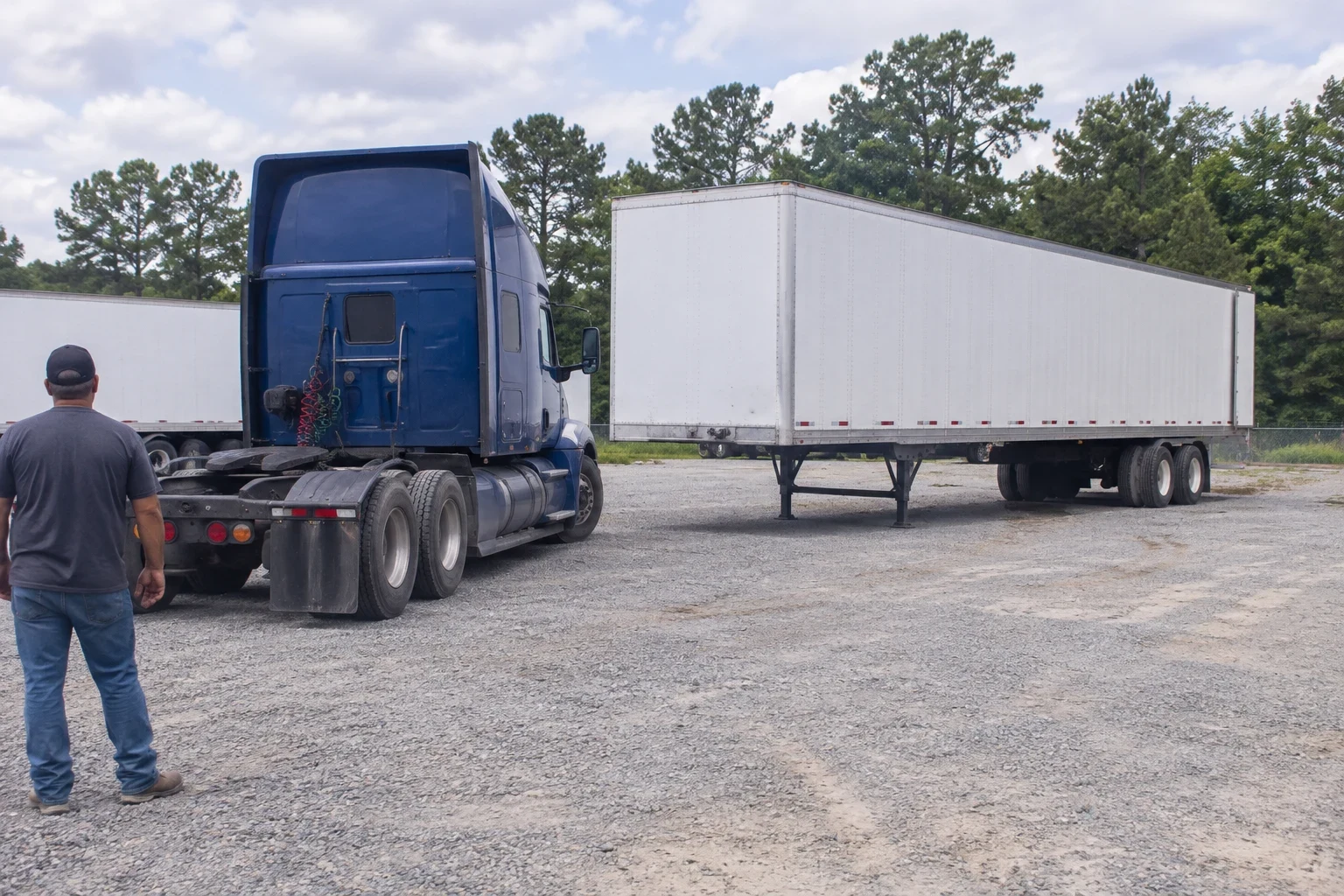
ServicesTrailer Interchange
Trailer Interchange Insurance in Douglasville
When you sign an interchange agreement, the trailer becomes your responsibility the moment you hook up. We help owner-operators and small fleets set the right limit, deductible and covered perils so a damaged trailer doesn't come out of your pocket.
What trailer interchange coverage does
Trailer interchange insurance pays for physical damage to a trailer you don't own while it's in your possession under a written interchange agreement. Your primary auto liability covers damage you cause to other people. It does not cover the trailer itself, and your physical damage policy usually only covers equipment you own.
This is common for intermodal drayage, power-only work and any lane where you swap trailers with another motor carrier. The agreement spells out who pays if the trailer is hit, burned, stolen or rolled. Most agreements, including the UIIA for intermodal equipment, require you to carry this coverage and to show a certificate of insurance before you pull a single box.
We read the agreement with you, then match the coverage to what it actually asks for. If your work involves trailers you haul without a written agreement, we explain non-owned trailer coverage instead, because the two are not interchangeable.
The pieces of a trailer interchange policy
- 01
Per-trailer limit
The most the policy pays for any one trailer. A dry van, a reefer and a flatbed carry very different values, so we set the limit to the most expensive unit you're likely to pull, not an average.
- 02
Covered perils
Collision, fire, theft, vandalism and weather are the usual set. Some policies offer named perils only, which costs less but leaves gaps. We show you exactly which events are in and which are out.
- 03
Deductible choice
A higher deductible lowers your premium but means more cash out of pocket after a loss. We walk through what you could comfortably absorb on a bad week before you pick one.
- 04
Loss of use
Many agreements charge you a daily fee while a damaged trailer is out of service. Coverage for loss of use can be added so those charges are paid too.
- 05
Certificates for the trailer owner
Interchange partners and intermodal providers need proof of coverage on file. We issue the certificate of insurance and update it when your partners change.
Questions about Trailer Interchange?
Call(770) 525-6971Signs you need trailer interchange coverage
You signed an interchange agreement
If the paperwork makes you responsible for the trailer, you need coverage that matches it. Without it, a single claim can mean paying the full trailer value yourself.
You're starting drayage or intermodal work
Rail yards and container providers will not release equipment until your coverage is on file. This is often the first thing new drayage operators get stopped on.
You run power-only loads
Pulling a shipper's or broker's trailer with your own tractor puts that equipment in your care. Check whether the contract requires interchange or non-owned trailer coverage.
Your current policy only lists owned equipment
Physical damage coverage on your own trucks and trailers rarely extends to borrowed ones. If you've never checked, it's worth a look before a claim forces the question.
How we set it up with you
- 1
Review the agreement
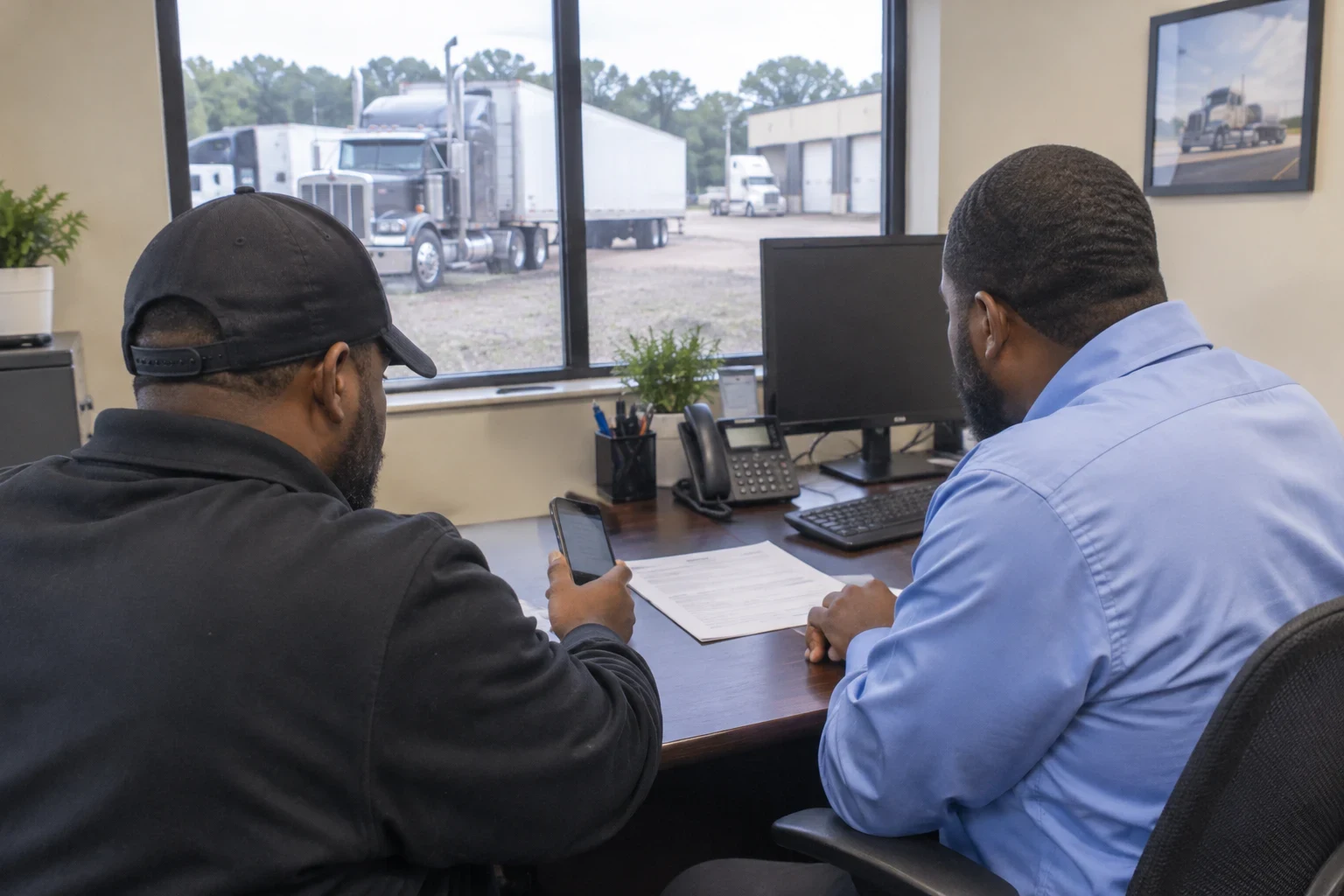
Send or read us the interchange agreement and tell us which trailers you pull. We look for required limits, deductibles, loss of use terms and who must be named on the certificate.
- 2
Compare the options
We lay out the coverage choices side by side: limit, perils, deductible and add-ons. You see what each change does to the premium and to your exposure, in plain terms.
- 3
Bind and file the certificate
Once you choose, we bind the coverage and send the certificate of insurance to your interchange partner so you can pick up equipment.
- 4
Adjust as your lanes change
New partner, bigger reefer, more trailers in rotation. We update the limit and certificates by phone or video so your coverage keeps up with your operation.
What moves the premium
Trailer interchange premiums depend on how much trailer value is in your hands and how likely a loss is. We explain each factor so you can see where your quote comes from. There are no hidden add-ons; anything optional is shown as optional.
- Trailer type and value
- A refrigerated trailer with a running unit costs far more to replace than a basic dry van or chassis. Higher limits mean a higher premium.
- Number of trailers at once
- Pulling one trailer at a time is priced differently from a fleet that has several interchanged units on the road the same day.
- Radius and lanes
- Short drayage runs around Atlanta rail yards carry different risk than long-haul freight across several states. Where you run affects the rate.
- Deductible and perils
- Broader perils and lower deductibles raise the premium. Named perils and higher deductibles lower it but leave more risk with you.
- Driving and loss history
- Clean MVRs and few past claims help. Recent trailer losses or new authority with no history can push the price up.
Trailer interchange questions
What's the difference between trailer interchange and non-owned trailer coverage?
Trailer interchange applies when there's a written agreement making you responsible for the trailer. Non-owned trailer physical damage covers trailers you pull without that kind of agreement. Some contracts accept one but not the other, so we check the wording before recommending either.
Does my primary liability policy cover a trailer I'm pulling?
No. Primary auto liability pays for damage you cause to other people and their property, not the trailer attached to your truck. Trailer damage needs its own physical damage coverage.
How high should my per-trailer limit be?
Set it to the value of the most expensive trailer you might pull under the agreement. Many intermodal agreements set a minimum, but your actual equipment may call for more.
Can I add trailer interchange to my existing truck policy?
Often, yes. It's commonly added as part of commercial trucking insurance alongside liability, physical damage and motor truck cargo. We review what you already carry and quote the addition.
How fast can you get a certificate to my interchange partner?
Once coverage is bound, we send the certificate of insurance directly to the party named in your agreement. Having the agreement and partner details ready on the call speeds things up.
Ready to hook up with the right coverage
Have your interchange agreement nearby and we'll go through it together. You'll hear the options, the trade-offs and your quote on the same call.